


 The hardwood floor in the living room and front hall had been refinished. They were welcoming upon walking through the front door of the ranch home Pam and her husband, Jim, were buying in a Cincinnati neighborhood.
The spacious kitchen, with an older tile floor, also was inviting. But the great room, back hall and three bedrooms were covered with worn carpet and ready for an update.
Pam had a plan to pull it all together into a cohesive, flowing look. But like most people who contact the Natural Interiors® program, she had specific requirements: Any new carpet preferably would be made of natural fibers, and it would be free of stain-proofing chemicals. Any floor finishes or paint would be as low-VOC as possible for the application.
“I wanted help finding products and properly vetting them for chemicals of concern and hazardous air pollutants,” Pam said. “I wasn’t being a purist. I just wanted to take all reasonable steps to minimize possible toxins.”
The hardwood floor in the living room and front hall had been refinished. They were welcoming upon walking through the front door of the ranch home Pam and her husband, Jim, were buying in a Cincinnati neighborhood.
The spacious kitchen, with an older tile floor, also was inviting. But the great room, back hall and three bedrooms were covered with worn carpet and ready for an update.
Pam had a plan to pull it all together into a cohesive, flowing look. But like most people who contact the Natural Interiors® program, she had specific requirements: Any new carpet preferably would be made of natural fibers, and it would be free of stain-proofing chemicals. Any floor finishes or paint would be as low-VOC as possible for the application.
“I wanted help finding products and properly vetting them for chemicals of concern and hazardous air pollutants,” Pam said. “I wasn’t being a purist. I just wanted to take all reasonable steps to minimize possible toxins.”
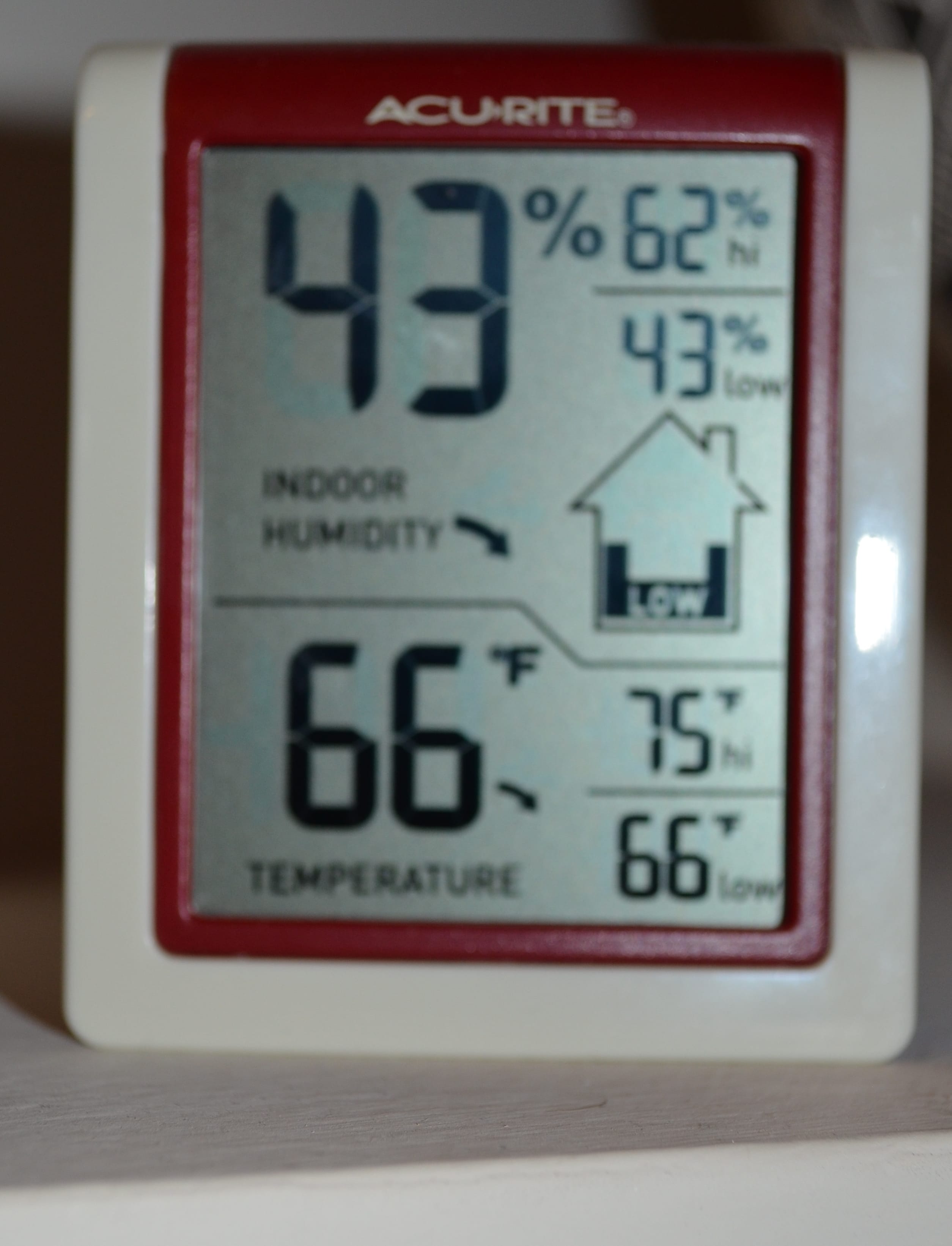 Colder temperatures usually mean drier air – inside and outside. That’s why hardwood flooring manufacturers issue written guidelines that the owner must keep indoor relative humidity levels between 39 and 60 percent.
When humidity drops too low, the floor with shrink. Too high, it will expand and cup.
But most people have no idea what their indoor humidity levels are at any given moment. And there are more reasons to know than just for maintaining your flooring’s health. It is important for your own health, too.
Colder temperatures usually mean drier air – inside and outside. That’s why hardwood flooring manufacturers issue written guidelines that the owner must keep indoor relative humidity levels between 39 and 60 percent.
When humidity drops too low, the floor with shrink. Too high, it will expand and cup.
But most people have no idea what their indoor humidity levels are at any given moment. And there are more reasons to know than just for maintaining your flooring’s health. It is important for your own health, too.
 Don’t be misled by the Forest Stewardship Council (FSC) Certification that comes with this Teak flooring. It does not mean the wood came from a sustainably managed forest. Instead, it comes from deconstructed structures in Indonesia – some up to 300 years old.
And it has proven to be the perfect look for the northern foyer at St. Xavier Church in downtown Cincinnati. Church administrators' desire for sustainable products and durability was a key reason Architects Paul Duffy and Adam Luginbill at glaserworks selected it.
Don’t be misled by the Forest Stewardship Council (FSC) Certification that comes with this Teak flooring. It does not mean the wood came from a sustainably managed forest. Instead, it comes from deconstructed structures in Indonesia – some up to 300 years old.
And it has proven to be the perfect look for the northern foyer at St. Xavier Church in downtown Cincinnati. Church administrators' desire for sustainable products and durability was a key reason Architects Paul Duffy and Adam Luginbill at glaserworks selected it.
 Something is changing in the flooring industry. Customers are asking more frequently about what chemicals the products contain.
Though there is no national statistic on what percent of the population has concerns, it is safe to say that 2015 should go down in history as the year mainstream consumers gained noticeable awareness of how flooring can impact indoor-air quality and human health.
It started in March, with the 60 Minutes report that alleged excessive formaldehyde was being emitted from cheap glue used to make some of Lumber Liquidator’s laminate flooring in China. A second wave of concern erupted weeks later when it was announced that The Home Depot would phase-out sales of vinyl flooring that contained ortho-phthalates.
Something is changing in the flooring industry. Customers are asking more frequently about what chemicals the products contain.
Though there is no national statistic on what percent of the population has concerns, it is safe to say that 2015 should go down in history as the year mainstream consumers gained noticeable awareness of how flooring can impact indoor-air quality and human health.
It started in March, with the 60 Minutes report that alleged excessive formaldehyde was being emitted from cheap glue used to make some of Lumber Liquidator’s laminate flooring in China. A second wave of concern erupted weeks later when it was announced that The Home Depot would phase-out sales of vinyl flooring that contained ortho-phthalates.
 A customer who has seen the 60 Minutes report about unhealthful levels of formaldehyde in certain laminate floors from Lumber Liquidators now is questioning a flooring purchase she was about to make.
“No worries,” her salesman says. “All of our flooring meets California Air Resources Board (CARB) standards for formaldehyde.” He is misleading, but not intentionally.
To assist its salespeople, a national retail group issues an alert to its members that reads: “All of our laminate flooring meets CARB 2 standards.” Another over-simplification.
Most flooring retailers – including those touting “natural” products – have limited understanding of how to gauge a floor’s impact on indoor-air quality. Understanding the evolution of people-friendly products, and keeping up with the ever-changing status of which manufacturer has added a certification and what the certification means, is a specialized field of its own. Compounding the confusion, certifications expire annually.
A customer who has seen the 60 Minutes report about unhealthful levels of formaldehyde in certain laminate floors from Lumber Liquidators now is questioning a flooring purchase she was about to make.
“No worries,” her salesman says. “All of our flooring meets California Air Resources Board (CARB) standards for formaldehyde.” He is misleading, but not intentionally.
To assist its salespeople, a national retail group issues an alert to its members that reads: “All of our laminate flooring meets CARB 2 standards.” Another over-simplification.
Most flooring retailers – including those touting “natural” products – have limited understanding of how to gauge a floor’s impact on indoor-air quality. Understanding the evolution of people-friendly products, and keeping up with the ever-changing status of which manufacturer has added a certification and what the certification means, is a specialized field of its own. Compounding the confusion, certifications expire annually.
As should be done with all new construction projects, moisture levels were monitored for weeks before the hardwood flooring installation began. After acclimating the boxes of flooring on-site for three days, the transformation began. It took five days:

 All of the wood meets CARB 2 standards for formaldehyde emissions. The brown, grey and travertine-look cork flooring meet GREENGUARD Gold.
 Even if you are not consciously seeking people- or planet- friendly products, it’s more likely in 2013 that the product you buy will have some environmental advantage -- particularly if it’s a building or interior finishing product.
The U.S. green building market has grown from $10 billion in 2005 to an estimated $85 billion in 2012, with expectations that it will exceed $200 billion by 2016, according to a recently published analysis by Environmental Building News.
The top motivators behind this movement? Health-related factors including indoor-air quality, in addition to energy use reduction, according to U.S. and global surveys. Not building a new home? These findings still affect you.
Even if you are not consciously seeking people- or planet- friendly products, it’s more likely in 2013 that the product you buy will have some environmental advantage -- particularly if it’s a building or interior finishing product.
The U.S. green building market has grown from $10 billion in 2005 to an estimated $85 billion in 2012, with expectations that it will exceed $200 billion by 2016, according to a recently published analysis by Environmental Building News.
The top motivators behind this movement? Health-related factors including indoor-air quality, in addition to energy use reduction, according to U.S. and global surveys. Not building a new home? These findings still affect you.
...
 Flooring retailers and distributors -- who have learned they must have Forest Stewardship Council (FSC) certification in order to sell FSC-certified products that count as certified wood under the U.S. Green Building Council’s rules -- are questioning whether FSC rules have gone too far.
FSC certification is the hallmark of sustainably harvested wood. While it is the only certification accepted for certified wood by the U.S. Green Building Council (USGBC) in awarding credit under its Leadership in Energy and Environmental Design (LEED) rating system, the USGBC acknowledges that it has not strictly enforced certification requirements on retailers.
Flooring manufacturers who produce certified products have FSC certification and must package and clearly label FSC-certified products. Some retailers who then sell those products argue that they are not repackaging or altering the materials, and should not have to pay to get certified. Depending on sales volume, a wholesale flooring distributor or retailer can expect to pay $2,000 and up annually for achieving and maintaining certification.
“Does it pencil out to become certified?,” asks Mark Thompson, sales manager for Major Brands Floor Supply /Abbey Carpet & Floor of Seattle. “Is it something that will drive business toward me? If the certification is so watered-down that every other store down the street is certified, then what goal was achieved? Some Eco-capitalist got more chumps to buy into his ‘label.’”
Flooring retailers and distributors -- who have learned they must have Forest Stewardship Council (FSC) certification in order to sell FSC-certified products that count as certified wood under the U.S. Green Building Council’s rules -- are questioning whether FSC rules have gone too far.
FSC certification is the hallmark of sustainably harvested wood. While it is the only certification accepted for certified wood by the U.S. Green Building Council (USGBC) in awarding credit under its Leadership in Energy and Environmental Design (LEED) rating system, the USGBC acknowledges that it has not strictly enforced certification requirements on retailers.
Flooring manufacturers who produce certified products have FSC certification and must package and clearly label FSC-certified products. Some retailers who then sell those products argue that they are not repackaging or altering the materials, and should not have to pay to get certified. Depending on sales volume, a wholesale flooring distributor or retailer can expect to pay $2,000 and up annually for achieving and maintaining certification.
“Does it pencil out to become certified?,” asks Mark Thompson, sales manager for Major Brands Floor Supply /Abbey Carpet & Floor of Seattle. “Is it something that will drive business toward me? If the certification is so watered-down that every other store down the street is certified, then what goal was achieved? Some Eco-capitalist got more chumps to buy into his ‘label.’”