

10 Jun Cork 2011-Style
From narrow planks that look like hardwood to large, defined tiles, cork’s design possibilities keep increasing
 As this year began, two manufacturers anticipated huge consumer attention on their newest products – cork flooring planks designed to look like wood. With this introduction, Wicanders Cork and USFloors revolutionized the appearance of cork floors, which until then, was limited to larger panels and squares.
New is good and consumers are taking note. But panels and squares are in no danger of extinction.
“The hottest trend we have seen in cork has been the large-format cork tiles,” says Sam Snow, owner of EcoFloors in Portland, OR. “They offer a unique look by having micro-beveled edges that really make the large format stand out. It’s a look of cork with a layout more similar to tile. The skinny cork planks have also gained some interest . They provide more of a hardwood look that works great in smaller, galley kitchens and little spaces where a larger format is not as appropriate.”
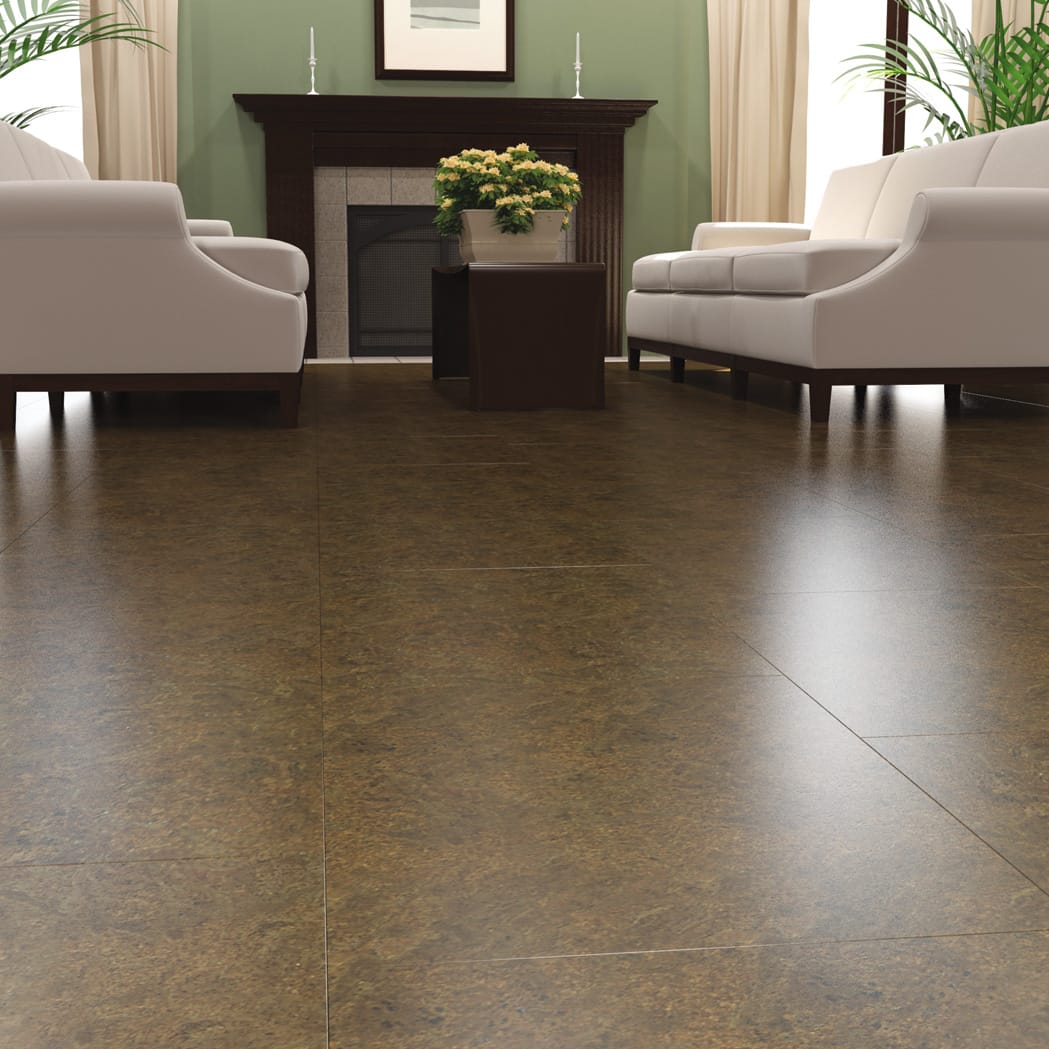
WE Cork large tiles
As cork options become more versatile, it can also be more difficult to choose. The original lure of this floor has been its warmth, cushioned feel underfoot, and its thermal and acoustical insulation abilities. With so many choices now available, the experts in our network say, be sure to compare styling, finishes, pricing and track records for quality and durability.
Cork finishes vary, and should be taken into consideration, (see Focus on the Finish). Snow notes that Natural Cork from USFloors and WE Cork have some of the smoothest finishes on the market, while Wicanders and IPO Cork have ceramic micro-bead finishes that have rougher textures. EcoFloors sells all of these on a regular basis.
WE Cork, Snow points out, offers some unique looks, including Nairobi and Sardinia, that are not available elsewhere. In addition, WE Cork offers a full range of size options – from the standard floating 1-foot by 3-foot panels to large-format tiles to solid glue-down squares. Solid glue-down cork installations offer an advantage when it comes to true refinishing, but require a subfloor that is almost perfectly level. Floating, engineered or self-locking panels, which are not attached to the subfloor, are more forgiving, can be “floated” over an existing floor and offer ease of installation. While some brands can be “buffed” and recoated with finish, these floors cannot be sanded because the floor’s wear layer is a thin veneer. (See diagram at top, courtesy of Wicanders.)
“We have put WE Cork in kitchens, living rooms, basements and entire homes,” Snow says. “No complaints thus far.”

WE Cork “Sardinia”
New this year from WE Cork is the Eco Collection, which is made from recycled wine bottle stoppers. The company first launched the line in two colors – natural and earth.
“The line has been so well –received and the demand has been such that we have launched two more shades in this pattern – ivory and ash,” says Sheila Furtney, WE Cork sales manager.
Interstate Flooring in Portland, OR, has had good luck with WE Cork, which offers some unique looks at fair prices, says John Hill, ecological director. But his best seller — because of quality at a lower price – is Seville by Wicanders, he says.
Judging by the samples customers are checking out from Interstate, the narrower plank floors that look like hardwood also are generating a lot interest, he says.
Wicander’s Corkplank is 5-1/2-inch wide and 48-inches long.
“It takes cork further away from its traditional tile, panel or square look into a dimension that is more mainstream,” says Tim Tompkins, national marketing director for Wicanders. “This dimension has been available in hardwood since the late 1990’s.

Wicanders “President’s Chocolate”
While cork historically has been considered first for kitchens, cork buyers are now more inclined to put this flooring throughout their homes, particularly when it has the hardwood dimensions Corkplank offers, Tompkins says.
Judith Huck, owner of Classique Floors in Portland, OR, says that installing the planks in a herringbone pattern has become a noticeable trend. Cork with a pattern in it also is more popular than one without, she says.
“Cork floors are great for us baby boomers who are starting to feel our age,” she says, noting that she plans to put WE Cork in her own home. “Cork feels warm, is easy on the joints and is a comfortable floor to stand on in the kitchen.”
Still, indoor air quality goes hand in hand with the other environmental attributes cork flooring offers, and that can be extremely important in choosing a product, EcoFloor’s Snow says.
“All cork is not created equally and some may not be as good for indoor air quality as others,” Snow says. “The core boards, adhesives and finishes are a possible source for toxins, and the better companies that are using independent certifications are getting an edge on the competition. More and more building occupants are becoming concerned about indoor air quality.”
Pingback:Part II: Cork 2011-Style | Natural Interiors® Blog
Posted at 12:22h, 29 August[…] Part I: Cork 2011-Style here. Find a WE Cork retailer […]
Pingback:Ask this Green Floor Guy -- and Gal | Natural Interiors® Blog
Posted at 05:15h, 27 October[…] The truth is that there are big differences in how some of these finishes feel to the touch and perform, so make sure you like the one you choose. See Focus on the Finish. There also are many patterns and plank styles to choose from, see Cork 2011-Style. […]
Pingback:The Many Faces of Cork | Natural Interiors® Blog
Posted at 07:38h, 15 February[…] for the flooring’s best performance. Visit Natural Interiors® blogs for information on different styles, different finishes and points to consider in choosing a cork floor.© […]
Pingback:Cork 2012 Style | Natural Interiors® Blog
Posted at 11:53h, 05 April[…] You may also be interested in Cork 2011 Style […]
Katharina
Posted at 14:19h, 22 AugustThanks for your time for posting “Cork 2011-Style | Natural Interiors® Blog”.
I actuallymight really wind up being returning for a great deal more reading and commenting here soon
enough. Thank you, Dillon
countertops
Posted at 12:31h, 05 SeptemberWOW just what I was looking for. Came here by searching for cork flooring
Here is my web-site – countertops
Pingback:In Search of Natural | Natural Interiors®
Posted at 10:33h, 19 February[…] HDF (High Density Fiber Board) as a core, and a cork backing. This construction is among several points to considerwhen choosing cork because it affords the sturdiest, moisture-resistance product and keeps the […]