Home & Real Estate

Complaints about carpet pad odors show that researching the underlayment is just as important as the carpet that goes over it green-labelThe homeowner was almost distraught. She had just invested in a high-quality nylon carpet, only to deal with chemical fumes throughout her home as soon as the installation was complete. Now, she was spending hours doing research on the Internet, and she called Natural Interiors® for help. She had a remnant of the carpet and had isolated it long enough to know that it was not the problem. The odors, she had determined, must be coming from the carpet pad. “Can you tell me about chemical-free wool carpet and pad that you carry?,” she asked. “I am thinking that I may need to redo this whole project.” I replied: “Is the company that sold you the carpet and pad going to give you your money back? It would be a real shame for you to have to pay twice for the same job.”

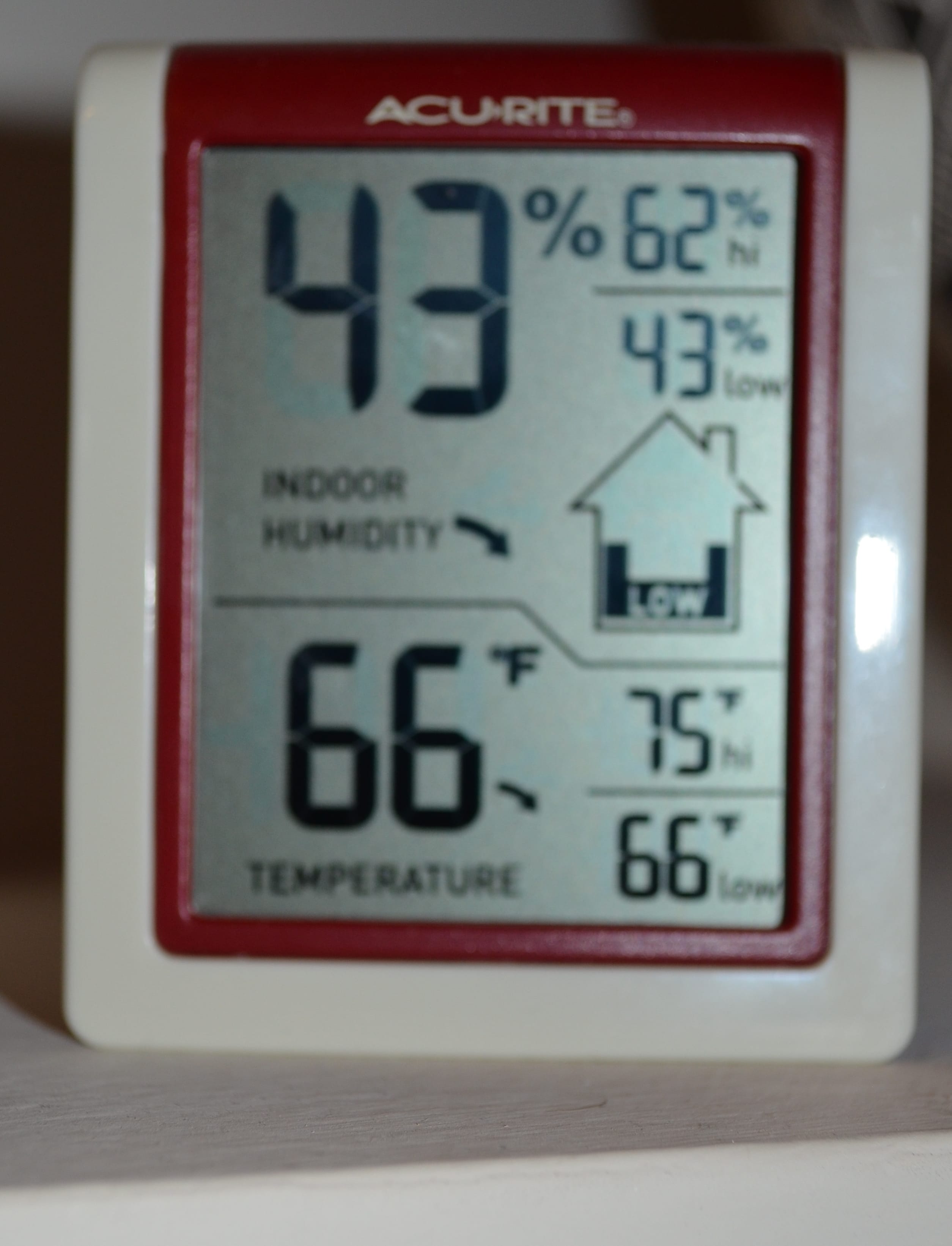
Temperature changes of winter and summer should remind you to get a hygrometer, even if you don't have hardwood floors DSC_0568Colder temperatures usually mean drier air – inside and outside. That’s why hardwood flooring manufacturers issue written guidelines that the owner must keep indoor relative humidity levels between 39 and 60 percent. When humidity drops too low, the floor with shrink. Too high, it will expand and cup. But most people have no idea what their indoor humidity levels are at any given moment. And there are more reasons to know than just for maintaining your flooring’s health. It is important for your own health, too.

Onsite, UV-cured hardwood floor finishes are starting to beam BulldogWe talk a lot about low-VOC (Volatile Organic Compound) floor finishes, and the scientific advancements that have produced less-toxic polyurethanes and natural oil floor coatings.  But the truth is that our search for the perfect people-and planet friendly option continues daily. “Water-based” and “waterborne” now are second only to “low-VOC” on the list of buzzwords that put our minds at ease. But when you consider that zero-VOC paints are readily available, the VOC content in floor coatings can seem high, in addition to other chemicals that some formulas use. This reality has made the ultra-violent curing machine the latest proven weapon in our arsenal of remedies for unhealthful indoor air. It stops chemical emissions by instantly curing the finish that would ordinarily take days to weeks to completely dry and stop off-gassing. In addition, waterborne polyurethanes with VOC content as low as 17 grams per liter are now available.

Carpet padding can now be held to the same standard as carpet for indoor-air quality

green-labelAt last, a moment many of us have been waiting for has arrived.  A testing program is now available for carpet padding that will actually ensure it does not emit unhealthful levels of chemicals.

A lot of people think we already have this through the CRI Green Label program for testing pad.  But the CRI Green Label Plus program that is used for carpet is far more stringent, and soon, we will be able to look for this label on carpet padding, too.

The Carpet & Rug Institute (CRI) and the Carpet Cushion Council announced earlier this week that the Green Label Plus program is being opened up to pad manufacturers.

 "This offers cushion manufacturers the opportunity to qualify their products according to these more stringent standards and provide additional assurance for consumers concerned about indoor-air quality or potential VOC emissions," a CRI spokesman told TalkFloor.


Backyard deer-feeder adds unmatchable natural touch, felt throughout this home’s interior

026Porcelain tile flooring – one style for the kitchen and laundry room, another for the foyer and bathrooms  – offers clean lines and extreme durability.

It blends seamlessly with the hand-scraped, prefinished hardwood flooring, which has been used to replace carpet in the dining room.

Triexta carpet – made from corn-based fuel – softens the family room, which is filled with natural light, thanks to large windows there, and in the adjoining foyer.  Standing there, something tells you to look again, out of the double glass doors in the family room.

Wintertime’s dry air means special precautions for hardwood floors

030Q.  I had solid Red Oak select installed throughout my first floor last summer. It was sanded and  finished with low-VOC waterborne polyurethane on site. It was absolutely perfect.

But now that winter is here, there are spaces between the boards. Is it possible that I was sold inferior wood?

A. Gaps between floor boards are common in the wintertime. Your installer should have told you that you have to control the humidity in your home to prevent inordinate gapping. In fact, most hardwood manufacturers recommend maintaining your indoor environment at 40 to 60 percent humidity year-round. But 36 to 50 is better if you want to prevent mold growth.

Properly done, seams should not be an issue in linoleum installation Forbo QA1Q. We are remodeling an older home and I was "sold" on Marmoleum, until I kept coming across questions about repairing seams which have buckled. I want to use it in the bathroom floors, but I am really hesitant since reading all these questions about repairing the seams. Have you had questions on this and/or how do you feel about using Marmoleum in the bathrooms? Many thanks! --  LM Sequim, WA A. Dear LM: If you are using Marmoleum sheet goods that are installed by a contractor who is properly trained, you should have no problems with seams that need repair.

What do ceramic nano beads mean for softness underfoot?  005Q. I am puzzled about the ceramic bead layers advertised as being part of the finish on Wicanders Cork Flooring. Does this add considerable hardness to the cork surface?  I’m seeing the comfort aspect of cork, and am actually replacing ceramic tile with the cork – so I don’t want to replace hard ceramic with hard ceramic! A. The ceramic beads are crystals that are embedded in the layers of the UV- cured urethane finish that is topically applied at the plant during the final stages of the manufacturing process. These tiny microscopic particles do not add to the hardness of the cork, but rather to the long-term wear-ability of the finish.

Water-based stains offer better indoor-air quality and a different aesthetic, but applying them requires an experienced professional There is a critical question you should put to your hardwood flooring contractor if you are planning to finish your floor with a water-based stain: Does he know how to apply it? The question is easily overlooked. Most of us would assume this knowledge is a given. But applying water-based stain requires a different technique than what is used with traditional oil-based products. And so can applying a water-based polyurethane over the water-based stain. If you try to use these stains like traditional products, you most likely will not be happy with the final appearance of your floor. And you will face the costs of refinishing in order to fix it.

Luxury Vinyl Tile’s realistic patterning and glue-less installation boost demand despite uncertain “green” product attributes A floor does not have to be natural to look natural. And the new natural looks of a number of luxury vinyl tile (LVT) brands – coupled with glue-less installation options -- are noticeably boosting LVT sales. Newer, self-locking installation systems do not require adhesives for installation, and replication improvements mean fabulous imitations of wood, ceramic and other patterns. You don’t need adhesive to install these products. So the products much easier to install and repair, they are more indoor-air friendly, and they’re water-resistant, too.